
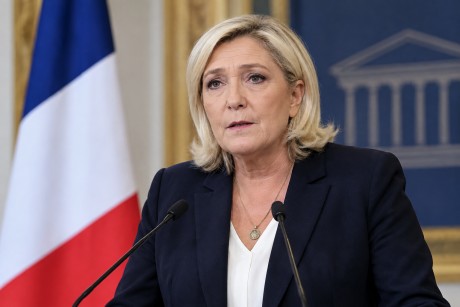
French domestic financial priorities may see a shift in resources as Marine Le Pen, the co-leader of France’s National Rally party, calls for a reduction in financial support for Ukraine. Le Pen’s remarks highlight the tension between maintaining international commitments and addressing internal economic pressures, an issue that is increasingly resonating with the French electorate ahead of the 2027 presidential election.
On September 16, Le Pen stated that while France should continue its support by training Ukrainian soldiers and providing military equipment, the current level of financial aid is unsustainable given the country’s budgetary constraints. Her stance injects a new dimension into France’s political discourse, which is already grappling with balancing public spending and foreign policy commitments amid the ongoing war between Russia and Ukraine.
Le Pen’s comments are not meant as a critique of Ukraine but rather as a strategic pivot towards diplomatic resolutions to the conflict. Her approach aligns with other figures within the National Rally party who advocate for a reevaluation of financial aid, while still endorsing military cooperation with Ukraine. This nuanced position aims to maintain France’s support for Ukraine’s defense efforts without further straining its own financial resources.
The debate over foreign aid to Ukraine is becoming a significant topic in France’s political arena, reflecting broader concerns about the nation’s fiscal health. With the presidential election looming, policies concerning Ukraine and government expenditures are expected to be pivotal issues. Le Pen’s position may resonate with voters who are increasingly focused on domestic economic challenges, potentially shaping the political landscape in the lead-up to the election.