
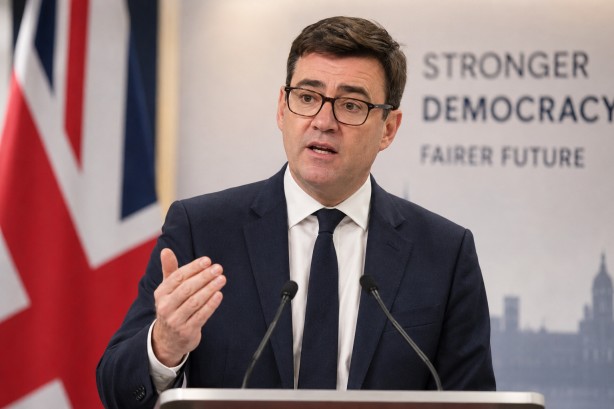
Prime Minister Andy Burnham of the United Kingdom has advocated for the adoption of a written constitution, highlighting that the government’s devolution agenda strengthens this case. He argues that as the political landscape evolves, a new constitutional settlement is necessary to support the changes. Burnham’s vision includes increased decentralization, proposing that regional leaders should be granted more financial authority, which would be underpinned by a codified framework delineating the roles of governments across England, Scotland, Wales, and Northern Ireland.
Describing the proposed reforms as a significant move away from the centralized decision-making traditionally associated with Westminster, Burnham emphasized the transfer of more power to regional mayors and local governments. This shift is seen as a pivotal step towards addressing regional inequalities and promoting more balanced economic growth across the UK. By redefining how power is distributed, Burnham aims to create a governance structure that is more responsive to diverse regional needs.
Experts have noted that implementing a written constitution would be one of the most consequential constitutional changes in British history. Such a move would not only support devolution but also necessitate broader reforms. It would involve clearly defining the structure and powers of the UK state, creating a more transparent and organized framework for governance.
The call for a written constitution aligns with Burnham’s long-term goal of reducing disparities between regions. By empowering local governments and providing them with greater fiscal control, he envisions a more equitable distribution of resources and opportunities. This approach aims to ensure that all parts of the UK can contribute to and benefit from national prosperity.
As the UK navigates its constitutional future, Burnham’s proposal for a written constitution represents a bold step towards modernizing its political system. By addressing the need for a clear and codified governance structure, this initiative seeks to create a more balanced and cohesive union, responsive to the needs of its diverse regions.