
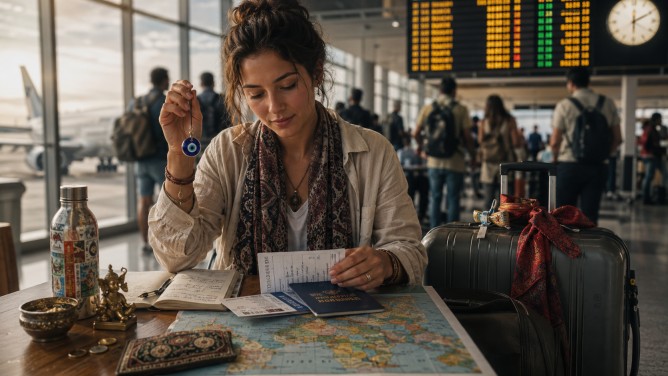
Travel often carries with it a sense of adventure, filled with traditions and habits that enhance the experience. Across various cultures, travelers have embraced unique superstitions, believed to bring good fortune and protection during their journeys. These intriguing beliefs continue to be observed around the globe, adding a layer of cultural richness to the travel experience.
In the Balkans, carrying a clove of garlic in one’s luggage is a common practice, as garlic is traditionally believed to ward off negative energy and the evil eye. Similarly, many travelers touch or tap the exterior of an aircraft before boarding, a gesture considered to bring good luck and offer reassurance to anxious flyers. Another widely observed ritual involves stepping onto a plane with the right foot first, symbolizing a positive start to the journey and welcoming good fortune.
Certain practices are also observed to ensure a smooth and safe return. In parts of the Middle East and the Balkans, it is customary for families to sprinkle or pour water behind someone departing on a trip, with the flowing water symbolizing a safe, smooth journey and hopeful return. Meanwhile, cultural beliefs about numbers can influence travel decisions; while the number 13 is seen as unlucky in many Western nations, in China, the number 4 is avoided due to its pronunciation resembling the word for death, and in Italy, 17 is traditionally considered inauspicious.
Other customs focus on preparing mentally for travel. A traditional Slavic practice involves sitting on packed luggage for a brief moment before setting off, allowing travelers a chance to gather their thoughts and mentally prepare for the journey. Conversely, sweeping the floor immediately after someone departs is deemed unlucky in several cultures, as it is thought to symbolically sweep away the traveler’s good fortune or interfere with their safe return.
Though these superstitions lack scientific backing, they remain an integral part of travel culture, cherished for their ability to preserve familial traditions and cultural identities. For many, these rituals are less about their efficacy and more about the excitement and anticipation they bring to the start of a new journey, connecting travelers to their heritage and the shared human experience of travel.