
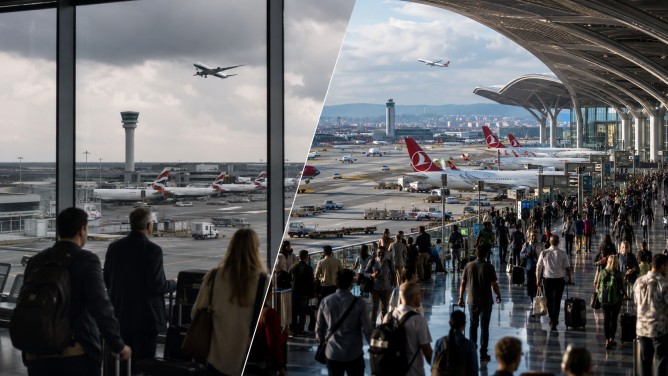
In a notable shift in airport rankings, Heathrow Airport has ceded its position as Europe’s busiest aviation hub to Istanbul Airport, which surpassed it in passenger traffic for July. The latest figures show that Istanbul Airport handled 8.15 million passengers in July, overtaking Heathrow’s 7.86 million. This marks a decline of 1.5% in passenger numbers at Heathrow compared to July of the previous year, while Istanbul enjoyed a 2.3% increase in traffic during the same period.
The drop in passenger numbers at Heathrow has been partly attributed to disruptions stemming from ongoing conflicts in the Middle East, highlighting operational challenges. This development has intensified calls for the UK government to approve a long-debated third runway at Heathrow. Operating with two runways that are near full capacity, the proposed £33 billion expansion aims to boost the airport’s annual capacity to approximately 150 million passengers, reinforcing the need for enhanced international connectivity, trade, and tourism.
Istanbul Airport, a relative newcomer to the scene having opened in 2018, benefits from a larger site and the advantage of round-the-clock operations. Currently, it operates three runways, with a fourth anticipated to be operational by the end of 2026. This expansion is likely to further cement Istanbul’s status as a key player in global aviation.
Meanwhile, London’s other major airports are experiencing growth. London Stansted and Manchester airports both celebrated their busiest-ever July, with Stansted handling 3.1 million passengers and Manchester accommodating 3.4 million. These figures underscore a broader trend of increasing passenger numbers across the UK’s airports, despite the setbacks faced at Heathrow.