
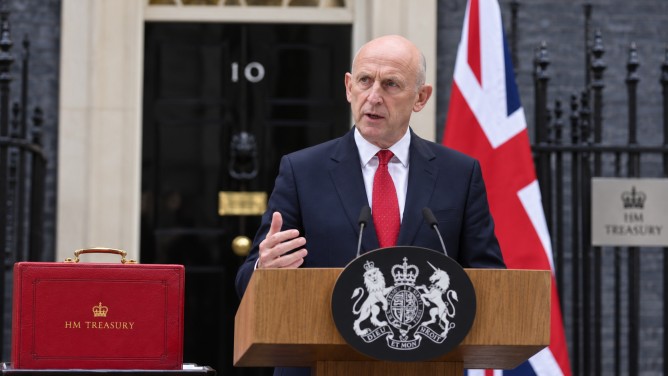
As the United Kingdom approaches its budget announcement on October 28, Chancellor John Healey has placed economic growth at the forefront of his agenda. In his inaugural comprehensive address since assuming the role in July, Healey emphasized the necessity of fostering growth throughout the UK while adhering to the government’s fiscal parameters. He asserted that enhancing economic growth is the most reliable strategy to strengthen the nation’s financial health.
Healey’s economic strategy unfolds against the backdrop of escalating government borrowing costs, with long-term bond yields climbing to their highest point in 18 years. This fiscal strain underscores the importance of maintaining fiscal discipline, especially amid ongoing global financial market uncertainties. While the chancellor refrained from confirming potential tax hikes, he reiterated the government’s pledge, as outlined in Labour’s manifesto, to refrain from increasing taxes on working citizens. Concurrently, he hinted at the party’s efforts to identify potential savings in welfare spending, with a particular focus on addressing the rising issue of youth unemployment.
The chancellor highlighted that facilitating young people’s transition from welfare to employment could yield not only economic but also social advantages. As young individuals enter the workforce, welfare costs decrease, and contributions through income tax rise. This dual benefit underscores the broader objective of Healey’s economic approach.
In addition to these measures, the forthcoming budget is anticipated to propose increased devolution of tax and spending authorities to regional mayors. These plans may involve adjustments to business rates and income tax revenues, aiming to empower local governance with greater fiscal autonomy.
Central to Healey’s vision are initiatives to boost investment, foster innovation, stimulate job creation, and reduce business regulation. By prioritizing these areas, the chancellor argues that stronger economic growth can effectively address the pressing issues of cost-of-living and business pressures that currently challenge the UK.