
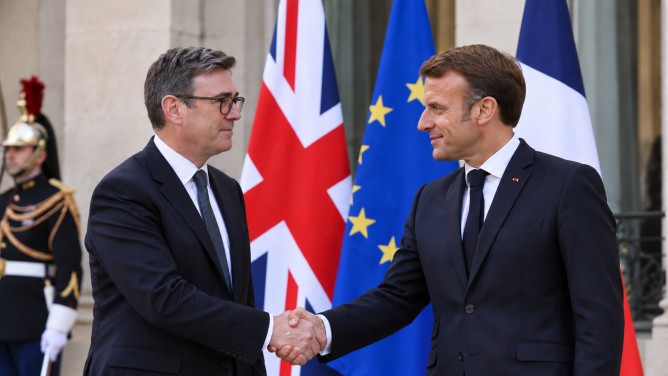
In a significant diplomatic engagement, UK Prime Minister Andy Burnham is poised to meet with French President Emmanuel Macron in London. Their discussions are expected to primarily address the challenge of irregular migration, bolster European relations, and touch on pertinent international issues such as the ongoing conflict in Ukraine and the situation in Iran. Central to their talks will be the collaboration between the UK and France to curb the number of small boat crossings in the English Channel, a persistent issue that both nations aim to tackle effectively.
The UK and France are planning to enhance resources for French law enforcement as part of their strategy to prevent the launch of migrant boats from French shores and dismantle smuggling operations. This includes an increase in the number of French police officers dedicated to this mission, with expectations that their numbers will soon reach nearly 1,050. These expanded teams will not only focus on seizing equipment and arresting smugglers but will also incorporate additional intelligence and coastal units to strengthen their operations.
While the incidence of small boat crossings has recently hit its lowest point in seven years, migration experts suggest that this decline is influenced by several factors, including improved security conditions in Syria. Nonetheless, the UK is keen on further reducing these crossings and views enhanced cooperation with France as a critical component of this effort. The meeting between Burnham and Macron is thus seen as pivotal in advancing these objectives.
In addition to migration concerns, Burnham is anticipated to seek Macron’s backing for fostering closer ties between the UK and the European Union. Renegotiating existing arrangements with the EU is a priority for the UK, with a focus on enhancing trade relations, particularly in sectors such as electricity and agriculture. This engagement is part of a broader strategy to fortify economic linkages and ensure smoother trade operations.
Another topic likely to surface in their discussions is a proposed youth mobility scheme, which could facilitate European students’ access to British universities at domestic fee rates. Burnham, however, is expected to approach the matter cautiously, especially regarding the number of young people the UK would be willing to accommodate under such a scheme. This proposal underscores a commitment to fostering educational and cultural exchanges while maintaining a balanced approach to immigration.