
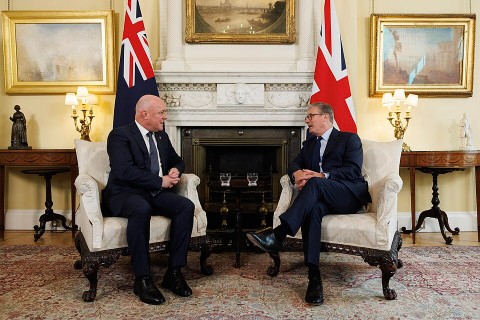
In a meeting on Wednesday, New Zealand’s Prime Minister Christopher Luxon and British Prime Minister Keir Starmer engaged in discussions that highlighted key international and economic issues. The leaders primarily focused on the ongoing conflicts in Iran and Ukraine, addressing the impact of these tensions on global shipping routes and fuel prices, as well as the broader cost-of-living crisis affecting many countries.
Luxon emphasized that both leaders concurred on the critical need to pursue diplomatic solutions to reopen the Strait of Hormuz, a vital passage for global maritime traffic currently hindered by regional strife. This cooperation underscores the commitment of both nations to ensure the stability of international shipping lanes. Additionally, the two leaders reiterated their support for Ukraine, stressing the importance of maintaining pressure on Russia amidst the ongoing war.
Highlighting the strong bilateral relationship, Luxon described the United Kingdom as a pivotal partner for New Zealand. Both countries are striving to fortify economic prosperity and enhance global security through close collaboration. Downing Street echoed this sentiment, with Starmer expressing gratitude to New Zealand for its contributions to international efforts in Ukraine. This includes the training of Ukrainian soldiers through Operation Interflex, a clear demonstration of New Zealand’s commitment to global peacekeeping initiatives.
The conversation between Luxon and Starmer also turned to domestic concerns, specifically the economic repercussions of global instability on households. The leaders discussed the financial strain caused by rising energy and fuel prices, a pressing issue as New Zealand prepares for its forthcoming national budget. This dialogue underscores the shared challenges faced by both nations in managing the economic fallout from international conflicts.
Further aligning their foreign policy objectives, the UK and New Zealand jointly called for Israel to cease the expansion of settlements and to uphold accountability for settler violence. This stance reflects their commitment to addressing broader geopolitical issues and promoting peace and stability in volatile regions.