
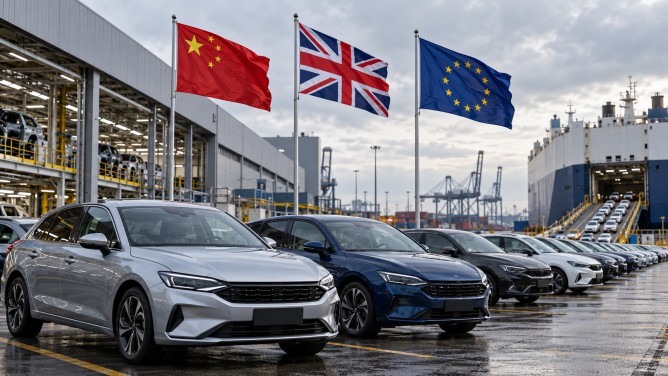
The UK car industry is grappling with a pivotal decision regarding its trade strategy with China and the European Union, amid rising pressure to impose tariffs on Chinese vehicle imports. Currently, the UK does not levy specific tariffs on Chinese cars, a stance that contrasts with the European Union, which has imposed duties of up to 45% on Chinese electric vehicles. Industry leaders warn that adopting similar tariffs could lead to higher prices for British consumers and deter Chinese manufacturers from investing in the UK.
Aligning more closely with China could jeopardize the UK’s access to the European market, which remains the largest export destination for British cars, accounting for approximately 58% of exports in the first half of the year. Meanwhile, Chinese automotive brands such as BYD, Omoda, and Jaecoo have gained significant traction in the UK, driven by strong consumer demand for affordable electric and hybrid vehicles. These brands have captured about 12% of the new car sales market in the first eight months of 2026.
Industry representatives are urging the UK government to clarify its long-term trade strategy. While Chinese investment could bolster UK manufacturing and offer consumers more competitively priced vehicles, potential EU restrictions could threaten the viability of British car exports and impact suppliers.
The discussion around trade policy has intensified as EU policymakers consider additional measures to mitigate the influence of Chinese vehicle imports, while British manufacturers continue to rely heavily on European market access. This dynamic underscores the complex trade-offs the UK must navigate as it balances its economic interests between two major markets.