
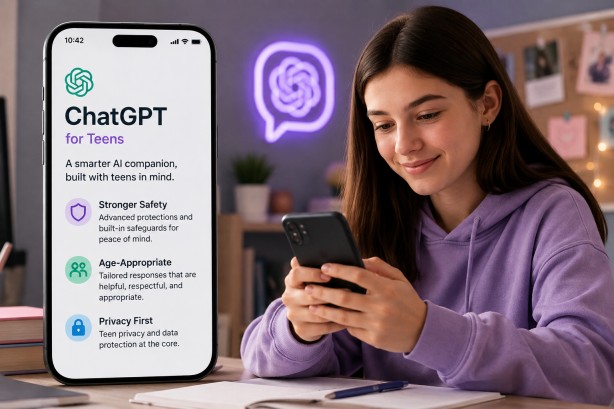
OpenAI has unveiled a new version of ChatGPT tailored specifically for teenagers aged 13 to 17, focusing on enhanced safety and age-appropriate features. This iteration includes stringent controls on content related to self-harm, suicide, and sexual or romantic discussions, aiming to create a secure environment for young users engaging with AI for educational purposes, daily inquiries, and social interaction.
The initiative introduces tools to promote healthier AI usage, such as the ability for parents to set quiet hours, restricting access to ChatGPT during designated periods. In scenarios deemed high-risk, parents may also receive safety alerts. OpenAI is implementing additional protections around sensitive subjects like eating disorders, limiting access to potentially harmful information, and guiding users toward offline support when necessary.
To prevent the formation of unhealthy emotional attachments to the AI, the teen version is programmed to avoid suggesting that it possesses personal feelings, consciousness, or emotions toward users. This measure is part of OpenAI’s broader strategy to ensure that teenage interactions with the chatbot remain beneficial and grounded.
OpenAI utilizes age-assurance technology to identify users under 18 by analyzing interaction patterns with the service. Those identified as minors are transitioned into the teen-specific version, which includes these added safeguards. This approach ensures that AI serves as a constructive educational tool, encouraging problem-solving and comprehension rather than merely providing answers or completing tasks for students.
Overall, ChatGPT for Teens is designed to assist students in enhancing their learning experience, emphasizing the role of AI as a supportive aid in education rather than a substitute for genuine academic engagement.